Showing posts with label toxic sugar. Show all posts

Monday, May 7, 2012

9 out of 10 Parents fail to truly read nutrition labels


Just because a label says "whole grain"  "all natural" or "no sugar added" doesn't mean its good for our children.  Think about it when have you ever seen a label so "half-grain" instead of whole, or "sugar added" or "not natural". Even its labeled "Natural-sugar-free-whole-grain" it could still be loaded with " Trans fats, mono-sodium glutamate (MSG), aspartame, and/or  high-fructose corn syrup". Get in the habit of reading labels and understanding them even on fresh fruit its important to understand what the label means. 

Reading the labels on Fruit:

  • Conventional Fruit Labels: Begin with the number 4, and never begin with the number 9.
  • Genetically Modified Fruit Labels: Begin with the number 8. Note that it begins with 8, not just contains the number 8. This is often a 5 digit number.
  • Organic Fruit Labels: These fruit labels always contain 5 digits, and begin with the number 9. Always check and make sure, as some “organic” products have been known to be deceptively labeled.
  • Read More about how to know if your food is "Conventional, Organic or Genetically Modified" 

  • A study conducted by the British Heart Foundation (BHF) found that nine out of ten mothers failed at reading nutrition labels, and did not understand the nutrition information on children’s foods. According to the BHF, 76% of mothers felt that “wholegrain” meant the product was likely to be healthy. In addition, they also thought that a product claiming it was “a source of calcium, iron and six vitamins” meant that the product was likely to be healthy.
    The confusion in regard to food labels is not an issue that pertains only to parents, and despite this study occurring years ago, it is still very true today that the majority of people aren’t savvy in reading food labels. The research found many individuals are tricked by the deceptive labeling of sugary foods specifically. The BHF went on to say that Nestle’s Honey Shreddies, which claims to be “wholegrain” and will “keep your heart healthy and maintain a healthy body”, has 13.6g of sugar.This is more than a ring doughnut in an average serving size, which totals 9.2g of sugar. High levels of sugar consumption can be the culprit for a number of health defects and issues faced today, while the massive over-consumption of sugar has some people asking: Is sugar becoming the next tobacco?
    With all the harmful ingredients added to our food supply today, it is critical to not only start reading nutrition labels, but also memorize which ingredients to avoid.

    Reading Nutrition Labels | Learn of What You’re Eating

    Sugar is not the only concern when investigating the real contents of a food product. Trans fats, monosodium glutamate (MSG), aspartame, and high-fructose corn syrup are but a few toxic additives that are usually incognito unless you are actively searching for them within the ingredients. This alone highlights the importance of not only reading nutrition labels, but also knowing what each ingredient is. Researching the properties of each additive before ingesting it is indeed a wise decision, and one that will ultimately pay off with an improvement in overall health.

    Ingredients to Avoid | Alpha-Dexionic-what?

    If while reading nutrition labels you’re wondering whether certain ingredients are written in Greek or Hieroglyphics, then reconsideration of the purchase is probably necessary. Given the current process of food creation in the U.S. and other developed countries, chances are that this ingredient is some form of a synthetic chemical, and one of many ingredients to avoid. A general rule is that if you cannot pronounce it, you should not eat it. Research what your food is composed of before bringing it home and cooking it, or putting it into your body. What you find may surprise you.

    Tuesday, April 17, 2012

    Americans are killing themselves with sugar

    Image from SetYouFreeNews.com
    Sugar and high fructose corn syrup (HFCS) are not just in soft drinks, pastries, and candies. They are hidden in most processed foods, condiments and sauces. Sometimes the sweetening ingredients in those foods and condiments are disguised as dextrose or corn syrup (which is most likely genetically modified) instead of sugar or HFCS.

    So sugar is ubiquitous in the standard American diet (SAD). The food like substances from convenience stores, fast food stops, and even upscale restaurants are usually loaded with either sugar or HFCS.

    High fructose corn syrup has become the sweetener of choice because it's cheaper and sweeter than sugar. Many say it's worse for you as well. Much of HFCS goes directly to the liver before it is metabolized anywhere else. What isn't used for energy from HFCS is stored as fat. Excess sugar also gets stored as fat.

    Even some infant formulas contain sugar or HFCS amounts equivalent to a can of soda. They're getting hooked on sugar early. Sugar and HFCS tend to be addictive.

    Since sugar became a household commodity in the 18th Century, sugar consumption has increased from four pounds per person annually to 180 pounds annually for half the American population. HFCS use has increased over ten thousand percent since its introduction into processed foods and beverages in the 1970s.

    Health issues with sugar and HFCS

    Obesity is obvious. Obesity levels are higher now than ever before. One-third of Americans are obese and another third are overweight. Eating a low fat diet only hurts your health. Our bodies need natural, good fats 

    Obesity and overweight conditions usually lead to pre-diabetes and diabetes type 2, which can also cause kidney disease. If dietary habits remain the same, high blood pressure and artherosclerosis (clogged and hardened arteries) can occur, leading to heart attacks and strokes.

    Coinciding with increased HFCS use is a sharp rise in non-alcoholic fatty liver disease (NAFLD), which is a precursor to sclerosis of the liver.

    Many tend to make a couple of bad mistakes upon realizing they need to cut down or completely eliminate sugar and high fructose corn syrup from their diet. The first is to use artificial sweeteners such as aspartame and Splenda (sucralose). That's just trading physical problems for neurological issues, while still getting fatter in the meantime 

    However, you can use naturally plant based Stevia as a healthy sugar replacement.

    Another mistake is to cut out obvious sweets and sodas while continuing to frequent fast food places and eat processed food meals at home. The gradual transition from the standard American diet should be toward cutting out processed and fast food meals completely, since most are laced with sugar or HFCS.

    Studies are beginning to determine that consuming lots of sugar or HFCS leads to cancer. Anaerobic cancer cells do thrive on sugar. They depend on fermenting glucose (sugar) for their energy because they've lost the ability to metabolize with oxygen (http://www.naturalnews.com/024827_cancer_sugar_women.html).

    That's why alternative cancer treatments strictly forbid sugar consumption. Of course, mainstream oncology does not even discourage sugar. It's widely understood that we all contain some free floating cancer cells that have not developed into tumors.

    Natural fructose in fruit is okay. Buthigh added sugar/HFCS consumptionwill only encourage cancer cells and cause the other health issues mentioned in this article.


    Thursday, April 12, 2012

    4 Health Foods with More Sugar than a Twinkie


    Anthony Gucciardi  - Natural Society - April 11, 2012

    sugarcube4 220x137 4 Health Foods with More Sugar than a TwinkieIs sugar the last ingredient that has not been slammed by health conscious activists? Numerous crusades have been waged against GMOs (genetically modified organisms), aspartame, high-fructose corn syrup and trans fat, but where does sugar reside in the equation? Excess sugar consumption, which has now become an ‘average’ amount of sugar consumption for many families, has been linked to everything from DNA damage to excessive cancer growth — so where is the anti-sugar movement?
    Some scientists and health experts are certainly declaring a health crisis over a large-scale ‘sugar epidemic’, but are you truly aware of how much sugar you intake on a daily basis? Even if you are consuming many health foods that are really free of other toxic offenders, chances are they may be containing a whopping amount of sugar — or at least enough ‘small’ amounts to set you over the edge throughout your daily nutritional intake. It is recommended you eat less than 16 grams of sugar per day (from natural sources) — even less if you are suffering from a serious health condition. A Twinkie has 18 grams of sugar in the processed form, and exceeds the daily sugar maximum in one health-threatening serving.

    But what about health foods? Many contain just about as much or more than 18 grams, and it’s important to know which. Here are 4 health foods with more sugar than a Twinkie:

    1. Yogurt

    You may be consuming yogurt in order to take in some beneficial probiotics, but the truth of the matter is that yogurt is oftentimes loaded with sugar — it can even be added  in larger amounts by the manufacturer. The natural amount of sugar is about 12 grams of sugar per 6-ounce serving, which is below the daily allotment. One 6-ounce container of fruit-flavored yogurt, however, can contain 32 grams of sugar, which is way more than the daily recommended amount.
    In order to avoid a high sugar content, look for high quality organic Greek yogurt (or avoid dairy altogether).

    2. Tomato Sauce

    Tomato sauce can be used for a number of different food items, but the amount in which it is used often exceeds the designated serving size. While the intended serving size is about half of a cup, many individuals use the entire cup for pasta or other meals. Many brands contain 11 or 12 grams per serving, which means a full cup can exceed 22 grams of sugar on average — more than a Twinkie.

    3. Granola Bars

    Granola bars can be loaded with sugar. Granted, it may sometimes be in the form of evaporated cane sugar. More often than not, however, it will be white sugar. I’ve personally witnessed many health-conscious individuals integrate at least one granola bar into their daily life without even thinking about how much sugar they’re taking in. In one instance, the sugar from the granola bars alone totaled around 50 grams! That’s way more than a Twinkie, and that’s from just one source.
    Some products like Clif Bar contain around 22 grams per bar, which surpasses the daily intake level.

    4. Pre-Made Smoothies

    As with juice, you simply should not be buying pre-made smoothies from the grocery store or restaurants. Make your own instead; the nutrients will actually reach your body instead of degrading over time, which ultimately makes the juice nothing but a tasty load of sugar. Smoothies from places like Jamba Juice can exceed 77 grams of sugar, while Smoothie King has options that top 117 grams. These are certainly way beyond the healthy levels. 

    Thursday, March 29, 2012

    More aspartame side effects revealed - headaches, blurred vision, neurological symptoms and more

    From: NaturalNews: For a great majority of Americans who consume processed food, food additives are an ever-present component of the menu and one with serious health effects. In the United States as well as in Canada, aspartame - an artificial low-calorie sweetener - has been used as a food additive as early as 1981 after it was approved for use in dry goods. It was approved again in the US in 1983 for carbonated drinks. This approval came in the face of much opposition which has not seen any respite over the ensuing years despite the claims of theFood and Drug Administration(FDA) and theJoint Expert Committee on Food Additives(JECFA) of theWorld Health Organizationthat aspartame is safe for use.
    Why aspartame is dangerous

    75 percent of reported adverse reaction to food additives is attributed to aspartame. Of these reactions, many are serious and include seizures and death. A number of the 90 documented symptoms as reportedly caused by aspartame are headaches/migraines, dizziness, seizures, nausea, numbness, rashes, depression, irritability, insomnia, hearing loss, vision problems, loss of taste vertigo and memory los.

    Those who study the adverse effects of aspartame report that the following medical conditions are triggered or worsened by aspartame: brain tumors, multiple sclerosis, chronic fatigue syndrome, mental retardation, Parkinson's disease, epilepsy, lymphoma, birth defects, diabetes and fibromyalgia.

    And that's not all -- according to Victoria Iness-Brown in her book "My Aspartame Experiment," aspartame is also addictive.

    What is aspartame composed of?

    To understand the effects of aspartame one must look at its genetic composition. This substance - which is 200 times sweeter than sugar - is made of 50 percent phenylalanine, 40 percent aspartic acid and ten percent methanol.
    Aspartic acid

    Russell Blaylock, a neurosurgery professor at theMedical University of Mississippi, describes aspartic acid as an isolated amino acid that is just as toxic as glutamate, another popular additive. Aspartic acid is an excitotoxin, a chemical that excites the brain to the point of death. It alters the manner of brain formation in newborn infants, permanently resulting in hyperactivity and behavioral changes in children.

    In its free form, unbound from proteins, it significantly raises the plasma level shortly after ingestion. The excess aspartate in the blood shortly after ingestion leads to high levels in certain areas of the brain. It slowly begins to destroy neurons and a large part of neural cells in a particular area of a brain are destroyed before any clinical symptom of an illness is noticed. Reported physical effects after long exposure to excitatory amino acid include Parkinson's disease, brain lesions, neuroendocrine disorders and hypoglycemia to mention a few.

    Pregnant women and lactating mothers increase their risk by consuming aspartame-laden products because the child's brain barrier, which protects the brain from excess aspartate and other toxins, is not developed enough to protect it from this chemical. Moreover, while in the womb and during the first year of life, these compounds can have free access to the nervous system due to the fragility of the infant's blood brain barrier during this stage of development.
    Phenylalanine
    Phenylalanine is an amino acid. Individuals with phenylketonuria, a genetic disorder, cannot utilize phenylalanine, causing possible buildup in the body. Even for persons who are not suffering from phenylketonuria, it has been shown that ingesting aspartame together with carbohydrates can cause increased levels in the body. Excess phenylalanine in the body causes the serotonin levels to dip leading to emotional disorders like depression. Human testing has shown that phenylalanine levels significantly increased in subjects who chronically used aspartame.Methanol
    Methanol is a neurotoxin and an extremely harmful substance. The enzyme chymotrypsin facilitates its release in the small intestine. Its absorption is sped up when aspartame is heated above 30 centigrad - or above 86 Fahrenheit - creating free methanol. This normally occurs when products containing aspartame are improperly stored or when subjected to heat.

    Normally, methanol breaks down into formaldehyde and formic acid. Formaldehyde interferes with DNA reproduction, retinal damage and birth defects. Its toxicity affects the nervous system, taking approximately ten to thirty hours before symptoms manifest - the most common of which is vision impairment. The symptoms for methanol poisoning have been reported to include dizziness, nausea, gastrointestinal disturbances, memory lapses and numbness to name a few.

    A consumption limit of 7.8mg/day is recommended, but a one liter of an aspartame sweetened drink contains about 56 mg of methanol. Heavy users of products containing aspartame consume as much as 250mg of methanol a day or 32 times the recommended limit.

    Since humans do not possess certain key enzymes that animal subjects possess, human are more sensitive to the toxic effects of methanol. It is without doubt that animal testing on aspartame or methanol does not accurately reflect the potential danger for humans.
    Do not wait, act now!
    In sum, recent research on aspartame has just revealed what appears to the tip of an enormous iceberg. Defenders of aspartame consistently insist that aspartame is safe to use after having been affirmed by the US FDA 26 times for the last 23 years. However, doubts as to its safety will always linger when well-respected researchers such as Dr. Blaylock and the Ramazzini Foundation speak out about its possible adverse effects and put their reputations on the line for what they believe in. This is even without taking into consideration the questionable circumstance that led to the approval of aspartame in the first place.

    Next time you open a diet soda think about the possible consequences. Sometimes, it takes years before a problem manifests itself; by then, it maybe too late for you to do anything about it.

    Thursday, March 22, 2012

    The Top 10 Worst Sources of Aspartame

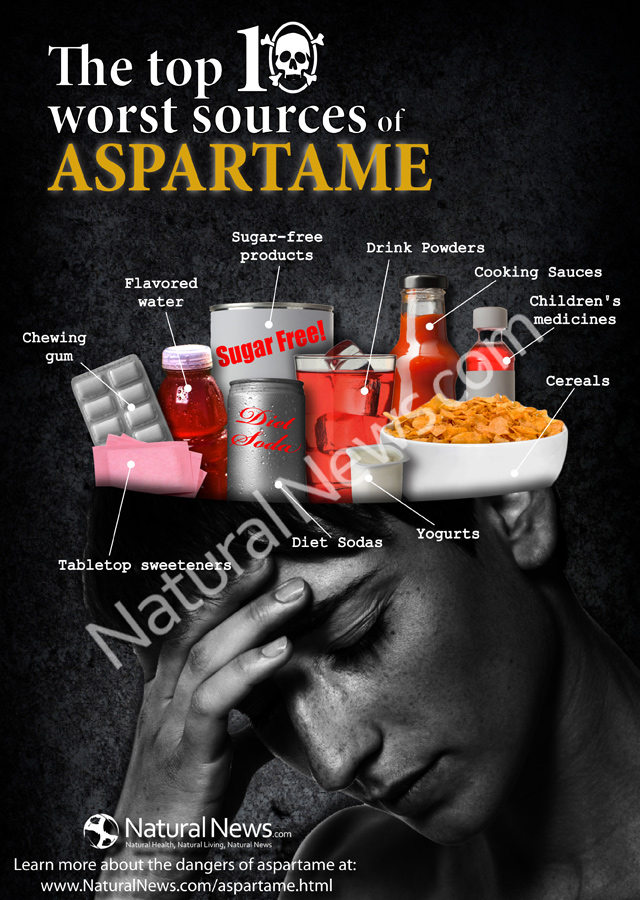
    From: NaturalNews Millions of Americans still have no idea that many of the beverages and foods they eat on a regular basis are contaminated with a neurotoxin posing as a sugar substitute. So to help raise awareness about the pervasive presence of toxic aspartame in the American food supply, Mike Adams, the Health Ranger, has released a helpful infographic that identifies the top ten worst sources of aspartame.

    The infographic highlights the use of aspartame in chewing gums, tabletop sweeteners, flavored water products, sugar-free foods and beverages, diet sodas, drink flavoring products, cooking sauces, children's medicines, yogurts, and cereals. And while these are not the only sources of aspartame in the food supply, they are among the most common.


    You can also learn more about the dangers of aspartame by watching this powerful interview between Mike Adams and Dr. Russel Blaylock, the foremost authority on aspartame and other excitotoxic additives:

    "At every point in the fertility process aspartame destroys, beginning with the gleam in Mom and Pop's eyes: it ruins female sexual response and induces male sexual dysfunction," wrote Dr. James Bowen, a neurologist and chemist. "Beyond this, aspartame disrupts fetal development by aborting it or inducing defects. And if a live child is born aspartame may have heinously damaged the DNA of the baby, cursing future generations."

    This is just one of the many side effects of consuming aspartame, of course, but it is one of the most serious. Millions of people think that using aspartame instead of sugar will help them safely lose weight, when in fact aspartame is far more harmful than even processed sugars like high-fructose corn syrup (HFCS).

    "Both amino acids in aspartame freely enter the arcuate nucleus (at low dose), cause inappropriate release of hormones, and at high dose actually destroy these regulatory neurons," says Dr. Madelon Price, another aspartame expert. "This is why sexual dysfunction is associated with aspartame."

    Contrary to the claims made by the U.S. Food and Drug Administration (FDA) and others that aspartame is safe, a wealth of independent research has verified that aspartame is linked to causing autism spectrum disorders, neurological problems, birth defects, and gastrointestinal problems, among other things.


    Tuesday, March 13, 2012

    Sugar by Suicide - Reasons to Avoid Sugar - 126 of Them!


    Suicide by Sugar

    Suicide by Sugar is a book by Dr. Nancy Appleton. The book describes the dangers of sugar in detail and cites 200+ medical studies. The book also includes a list of reasons why sugar ruins health, which is similar to this list on the author’s blog: Whenever the book talks about sugar, it is also referring to these other sweeteners: 


    (Note: so a sugar by any other name is still SUGAR), agave syrup, agave nectar, barley malt, beet sugar, brown sugar, cane sugar, cane syrup, confections sugar, crystalline fructose, date sugar, evaporated sugarcane, fructose, fruit juice concentrate, galactose, glucose, granulated sugar, high fructose corn syrup, honey, invert sugar, lactose, liquid cane sugar, liquid cane syrup, maltose, maple syrup, molasses, powdered sugar, raw sugar, rice syrup, sugarcane syrup, table sugar, turbinado sugar, unrefined sugar, white sugar


    Some of the negative health effects of sugar mentioned in the book include:
    • Sugar is addictive. Rats who quit sugar cold turkey experience withdrawal symptoms.• In one study, 94 percent of rats preferred sugar over cocaine.• Sugar suppresses the immune system by depleting levels of phagocytes, which in turn reduces the body’s ability to fight infection and disease.• A policy statement by the American Academy of Pediatrics cited research that showed for each additional serving of soda consumed by a child, the body mass index and risk of obesity both increase.• Cooking with sugar food with sugar leads to the formation of advanced glycation end products, which are linked to many age-related diseases.• Fructose significantly raises triglyceride levels in the bloodstream.• Fructose can aggravate symptoms of IBS and diarrhea.• Fructose and sucrose contribute to the oxidative damage that leads to wrinkles.• Fructose intake leads to an increased excretion of several important minerals that are needed for health• Fructose consumption leads to the release of the hormone ghrelin, which induces hunger and leads people to overeat.• Sugar leads to the development of metabolic syndrome and heart disease. One study showed that participants who consumed one or more sodas per day were 48 percent more likely to already have metabolic syndrome.• High sugar intake leads to type 2 diabetes, which is also associated with dementia and depression• Women with high glycemic load diets or high fructose intake were over 50 percent more likely to develop pancreatic cancer.• Tumors may use sugar to fuel their growth.• Sugar can facilitate the emergence of seizures.
    Refined sugar is the number one cause of health problems in the world. The following list is taken from the Article126 Reasons Sugar Is Ruining Your Health by Nancy Appleton, Ph.D. If you have a thing for sugar, you might want to copy this list and put it on your refrigerator or underneath your sugar bowl.
    1. Sugar can suppress the immune system.
    2. Sugar upsets the minerals in the body.
    3. Sugar can cause hyperactivity, anxiety, difficulty concentrating, and crankiness in children.
    4. Sugar can produce a significant rise in triglycerides.
    5. Sugar contributes to the reduction in defense against bacterial infection.
    6. Sugar causes a loss of tissue elasticity and function, the more sugar you eat the more elasticity and function you loose.
    7. Sugar reduces high-density lipoproteins.
    8. Sugar leads to chromium deficiency.
    9. Sugar leads to cancer of the breast, ovaries, prostrate and rectum.
    10. Sugar can increase fasting levels of glucose.
    11. Sugar causes copper deficiency.
    12. Sugar interferes with absorption of calcium and magnesium.
    13. Sugar can weaken eyesight.
    14. Sugar raises the level of a neurotransmitters, dopamine, serotonin, and norepinephrine.
    15. Sugar can cause hypoglycemia.
    16. Sugar can produce an acidic digestive track.
    17. Sugar can cause a rapid rise of adrenaline levels in children.
    18. Sugar malabsorption is frequent in patients with functional bowel disease.
    19. Sugar can cause aging.
    20. Sugar can lead to alcoholism.
    21. Sugar can cause tooth decay.
    22. Sugar contributes to obesity.
    23. High intake of sugar increases the risk of Crohn's Disease, and ulcerative colitis.
    24. Sugar can cause changes frequently found in person with gastric or duodenal ulcers.
    25. Sugar can cause arthritis.
    26. Sugar can cause asthma.
    27. Sugar can cause Candida Albicans (yeast infections)
    28. Sugar can cause gallstones.
    29. Sugar can cause ischemic heart disease.
    30. Sugar can cause appendicitis.
    31. Sugar can cause multiple sclerosis.
    32. Sugar can cause hemorrhoids.
    33. Sugar can cause varicose veins.
    34. Sugar can elevate glucose and insulin responses in oral contraceptive users.
    35. Sugar can lead to periodontal disease.
    36. Sugar can contribute to osteoporosis.
    37. Sugar contributes to saliva acidity.
    38. Sugar can cause a decrease in insulin sensitivity.
    39. Sugar leads to decreased glucose tolerance.
    40. Sugar can decrease growth hormone.
    41. Sugar can increase cholesterol.
    42. Sugar can increase the systolic blood pressure.
    43. Sugar can cause drowsiness and decreased activity in children.
    44. Sugar can cause migraine headaches.
    45. Sugar can interfere with the absorption of protein.
    46. Sugar causes food allergies.
    47. Sugar can contribute to diabetes.
    48. Sugar can cause toxemia during pregnancy.
    49. Sugar can contribute to eczema in children.
    50. Sugar can cause cardiovascular disease.
    51. Sugar can impair the structure of DNA
    52. Sugar can change the structure of protein.
    53. Sugar can make our skin age by changing the structure of collagen.
    54. Sugar can cause cataracts.
    55. Sugar can cause emphysema.
    56. Sugar can cause atherosclerosis.
    57. Sugar can promote an elevation of low-density proteins (LDL).
    58. Sugar can cause free radical in the blood stream.
    59. Sugar lowers the enzymes ability to function.
    60. Sugar can cause loss of tissue elasticity and function.
    61. Sugar can cause a permanent altering the way the proteins act in the body.
    62. Sugar can increase the size of the liver by making the liver cells divide.
    63. Sugar can increase the amount of liver fat.
    64. Sugar can increase kidney size and produce pathological changes in the kidney.
    65. Sugar can damage the pancreas.
    66. Sugar can increase the body's fluid retention.
    67. Sugar is enemy #1 of the bowel movement.
    68. Sugar can cause myopia (nearsightedness).
    69. Sugar can compromise the lining of the capillaries.
    70. Sugar can make the make the tendons more brittle.
    71. Sugar can cause headaches.
    72. Sugar can over-stress the pancreas.
    73. Sugar can adversely affect school children's grades.
    74. Sugar can cause an increase in delta, alpha and theta brain waves.
    75. Sugar can cause depression.
    76. Sugar increases the risk of gastric cancer.
    77. Sugar and cause dyspepsia (indigestion).
    78. Sugar can increase your risk of getting gout.
    79. The ingestion of sugar can increase the levels of glucose in an oral glucose tolerance test over the ingestion of complex carbohydrates.
    80. Sugar can increase the insulin responses in humans consuming high-sugar diets compared to low sugar diets.
    81 Sugar increases bacterial fermentation in the colon.
    82. Sugar can cause less effective functioning of two blood proteins, albumin and lipoproteins, which may reduce the body’s ability to handle fat and cholesterol.
    83. There is a greater risk for Crohn's disease with people who have a high intake of sugar.
    84. Sugar can cause platelet adhesiveness.
    85. Sugar can cause hormonal imbalance.
    86. Sugar can lead to the formation of kidney stones.
    87. Sugar can lead to the hypothalamus to become highly sensitive to a large variety of stimuli.
    88. Sugar can lead to dizziness.
    89. High sucrose diet significantly increases serum insulin.
    90. High sucrose diets of subjects with peripheral vascular disease significantly increases platelet adhesion.
    91. High sugar diet can lead to biliary tract cancer.
    92. High sugar diets tend to be lower in antioxidant micronutrients.
    93. High sugar consumption of pregnant adolescents is associated with a twofold-increased risk for delivering a small-for-gestational-age (SGA) infant.
    94. High sugar consumption can lead to substantial decrease in gestation duration among adolescents with high sugar diets.
    95. Sugar slows food's travel time through the gastrointestinal tract.
    96. Sugar increases the concentration of bile acids in stools and bacterial enzymes in the colon. This can modify bile to produce cancer-causing compounds and colon cancer.
    97. Diets high in sugar can increase fasting blood glucose.
    98. Sugar combines and destroys phosphatase, an enzyme, which makes the process of digestion more difficult.
    99. Sugar can be a risk factor of gallbladder cancer.
    100. Sugar is an addictive substance.
    101. Sugar can be intoxicating, similar to alcohol.
    102. Sugar can exacerbate PMS.
    103. Sugar suppresses lymphocytes.
    104. Decrease in sugar can increase emotional stability.
    105. The body changes sugar into 2 to 5 times more fat in the bloodstream than it does starch.
    106. The rapid absorption of glucose promotes excessive food intake in obese subjects.
    107. Sugar can worsen the symptoms of children with attention deficit disorder (ADD).
    108. Sugar adversely affects urinary electrolyte composition.
    109. Sugar can slow down the ability of the adrenal glands to function.
    110. Sugar has the potential of inducing abnormal metabolic processes in a normal healthy individual and to promote chronic degenerative diseases.
    111. Adolescents consuming high sugar diets are at increased risk for delivering small-for-gestational-age infants.
    112. High sucrose intake could be an important risk factor in lung carcinogenesis.
    113. Sugar increases the risk of polio.
    114. High sugar intake can cause epileptic seizures.
    115. Sugar is an addictive substance.
    116. Intensive Care Units: Sugar limit saves lives
    117. Sugar feeds cancer.
    118. Sugar causes high blood pressure in obese people.
    119. I.Vs (intravenous feedings) of sugar water can cut off oxygen to the brain.
    120. Sugar increases estradiol (the most potent form of naturally occurring estrogen) in men.
    121. Sugar can lower the amount of Vitamin E in the blood.
    122. Sugar can cause free radicals in the blood stream.
    123. Sugar can contribute to Alzheimer's disease.
    124. Sugar feeds cancer cells.
    125. Sugar given to premature babies often produces high blood sugar, causing them to lose precious sugar, water and salts through the urine, putting them at risk for dehydration and electrolyte imbalances.
    126. Sugar given to premature babies can also affect the amount of carbon dioxide premature infants produce, exacerbating problems for those with lung disorders.

    High sugar diets are linked to violence in prisoners. 

    Thursday, March 1, 2012

    Top 10 Weight Loss Tips


    Written by thedoc on April 13,  in Health Tips

    1. Eliminate processed foods sugars and starches, and replace them with fresh raw organic vegetables, organic meat and eggs. You should stick to these so that your foods are as nutrient rich as possible.
    2. Reduce your grains and fruits, as their sugars will contribute to the insulin resistance that makes it difficult for you to metabolize fat properly.  Grain examples:  Flour, pasta, cornmeal, bread, rice, etc.  Limit consumption of wholegrains and ELIMINATE refined grains.
    3. Replace soda, fruit juices, and other caloric beverages with plenty of pure water every day. Increase water intake has been helpful in all weight loss programs.  Sometimes a person thinks they are hungry and eats, when in fact they are just thirty.
    4. Incorporate plenty of exercise, and make sure you include high-intensity burst-type exercise that gets the heart rate up.
    5. Make sure you’re getting adequate restorative sleep. Insomnia and increased stress cause abdominal fat. Cortisol, a stress hormone, rises with lack of sleep. This hormone plays a role in appetite control.
    6. Manage your stress with a natural technique.  Take up a hobby that is a relaxing outlet for stress.  Take a walk instead of going to chocolate or sweets for “comfort.”
    7. Balance hormones naturally.  When your body has been under stress for any significant period of time it can cause adrenal fatigue.  Which then sets off a domino effect unbalancing other hormonal pathways. Have your adrenal rhythm checked and then balance naturally—this will also aid optimal carbohydrate metabolism.
    8. Detoxify your body. Whenever you are reducing weight and breaking down body fat, it’s important to incorporate some sort of detoxification program. Your body stores many toxinsinside fat cells, and when you break those down, toxins naturally enter your bloodstream and can actually make you feel sick if you don’t take steps to eliminate the toxins.  One of my favorite detox aids is chlorella.
    9. Exercise is every bit as important as what you eat.  NO exceptions:  age, gender, lifestyle, or level of health. A regular exercise routine is crucial for countless aspects of your health.
    10. Eliminate pain.  Is pain holding you back from a weight loss program?  Explore natural solutions to your weight loss and painful condition.  Many medications prescribed for painful conditions can slow metabolism and is some cases increase your cravings and/or appetite.   

    Monday, February 27, 2012

    Toxic Splenda Essentials Falsely Marketed to Health-Conscious Consumers

    Executed as a tactic to trick consumers, the Corn Refiners Association in 2010 decided to rename high-fructose corn syrup to ‘corn sugar’ as it would appear on food labels. The change was contrived by the organizations in response to millions of consumers recognizing the negative health consequences associated with the ingredient. Now, another sinister product is being marketed to the public differently, also because millions of consumers are recognizing the harm surrounding its consumption.

    Splenda has been sold as a no calorie sweetener for years, and for years those who use it have been suffering from health consequences. Sucralose, sold under the brand name Splenda, is nothing but chlorinated sugar. While sugar itself is leading to numerous health complications, chlorine is employed as a biocide in bleach, disinfectants, and insecticides. Needless to say, consuming this chlorocarbon is ruining your health.

    Instead of Splenda rightfully discontinuing their toxic creation, they have decided to make it sound even better for consumers. Splenda Essentials, a product being pushed on ‘health-conscious’ individuals, is packed full of vitamins and nutrients such as B vitamins, antioxidants, and fiber. Unfortunately, you would need to consume inconceivable amounts for any positive health impact. Even if you were to benefit at all from the added vitamins, you are still consuming the highly toxic sucralose.
    According to a Duke University study, Splenda has been shown to cause digestive imbalance by altering the microflora in the intestine while exerting other adverse effects. Nearly 200 studies have been conducted on Splenda, but only 10 percent (15 studies) looked at safety. 13 of those studies were funded by the creators of Splenda.
    In “The Lethal Science of Splenda, a Poisonous Chlorocarbon,” Dr. Bowen explains how chlorocarbons like sucralose can cause cancer, birth defects, and immune system destruction. He goes on to say:
    “Any chlorocarbons not directly excreted from the body intact can cause immense damage to the processes of human metabolism and, eventually, our internal organs. The liver is a detoxification organ which deals with ingested poisons. Chlorocarbons damage the hepatocytes, the liver’s metabolic cells, and destroy them.”
    Unfortunately there is a high chance that you could fall victim to these negative health consequences even if you don’t use Splenda. Sucralose has been shown to be contaminating much of the nations waste water, surface water, and ground water. To determine the degree of its presence, researchers analyzed water samples from 19 US drinking water treatment plants (DWTP) which serve more than 28 million people. Sucralose was found in source water of 15 out of 19 water samples, finished water of 13 out of 17, and distribution system water of 8 out of 12.