Showing posts with label heart healthy. Show all posts

Thursday, February 23, 2012

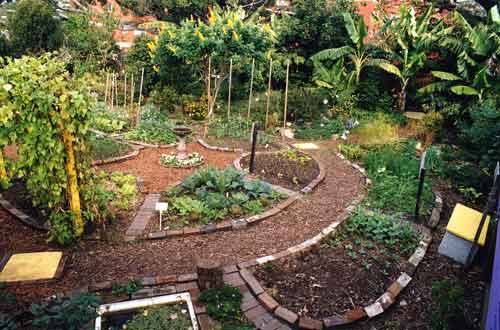
Six steps to create your own organic permaculture garden

From: Natural News

Organic gardening avoids the use of chemicals to make plants grow or protect them from insects, relying instead on natural gardening principles used for thousands of years. Permaculture organic gardening goes a step further and also emphasizes growing plants sustainably, working with rather than against the grain of the natural environment. Permaculture organic gardening is growing in popularity as more people realize that it offers an inexpensive and relatively low-maintenance way to grow their own fruits, vegetables, herbs and flowers.

(Our Note. . . . . . . If your like me you want to know exactly what a "Premacuture Garden" is so here's the best definition I could find, "
Permaculture is about designing human habitats that have the stability, diversity and resilience of natural ecosystems. Permaculture integrates renewable energy systems, energy efficiency, food/gardening systems, natural building, rainwater harvesting, urban planning along with the economic, political and social policies that make sustainable living possible and practical.")


Choosing a location

Observe your property at different times of day. Consider which areas receive the most sun, which are in shade for much of the day. Depending on where you live, if sunshine is a scarce commodity, you will want to expose plants to receive as much as possible. On the other hand, in desert regions, you will not want your plants to be in the area most likely to be parched by sun exposure. Also think protecting your garden from the paths where strong winds tend to blow through your property. Even a small property will have microclimates -- notice these and plant accordingly to give different plants either more sun or more shade according to their preference.

Selecting plants test

Avoid disease-prone plants which require time-consuming chores such as spraying and pruning by the gardener. Select plants which will thrive in your area rather than those which will require extra labor on your part to protect them from the environment. As far as possible, select plants which serve multiple purposes, such as fruit trees which will put forth blossoms in one season, fruit to pick in another, and provide shade for when you want to sit and enjoy your garden's natural beauty. Native plants are also more likely to attract local pollinators such as bees, and to draw butterflies so that your garden contains even more natural beauty.
Read more extensively about the following at Natural News
Making a home for your plants

Feeding your plants
Watering your plants


Sources for this article include:

http://www.safecom.org.au/permaculture.htm

http://www.organicgardening.com

http://www.appropedia.org/Beginners_permaculture_garden

Wednesday, February 15, 2012

Healthy Smoothies need the right ingredients

From: Antioxidants for health and longevityhealthy smoothie
Healthy smoothie recipes can produce drinks that are the most nutrient-dense meals on the planet. They're also just about the quickest, too! The secret to a healthy smoothie recipe is knowing which ingredients to use — and which to avoid.
Healthy smoothies contain only natural, whole foods, in a form that's easily digested and assimilated. They're loaded with antioxidants, vitamins, minerals and enzymes. There's no better way to give yourself an abundant, long-lasting supply of energy!
The good news is that anyone can make perfect healthy smoothies — recipes for smoothies are very flexible. You can experiment and switch ingredients to suit your taste and substitute your favorite beverage, fruit or vegetable.

The most common liquids people use to make smoothies are milk, yogurt, fruit juice, soy milk or some type of nut milk. Of all these choices, dairy-substitutes such as rice milk, hemp milk, coconut milk and almond milk are your healthiest ones, unless you use plain water. The only objection I can make about them is that they're factory-made, packaged beverages, essentially processed foods.


Make your own healthy smoothie starter!  If you have one of the more powerful blenders such as the BlendTec or VitaMix, you can make the freshest and healthiest smoothie starters in the world. They're easier to make than you'd think — and it only takes a couple of minutes.
You can use either of these as a substitute for milk in any healthy smoothie recipe — or drink them as is. They only keep for a day or so in the refrigerator, but they're so quick to make, it hardly matters.

Almond Milk Smoothie Starter

Combine the following in your blender:
  • 5 parts water
  • 1 part raw almonds,
    soaked overnight
  • 1 tbsp coconut oil (opt.)
  • stevia — sweeten to taste
Blend until smooth and strain
through a nylon-mesh nut bag
to remove the almond meal. Sweeten with stevia, if desired.

Coconut Milk Smoothie Starter

  • 4 parts water
  • 1 part shredded coconut
  • stevia — sweeten to taste
Pre-soak dried, shredded coconut in water to soften it up (optional). Blend until smooth and strain out the coconut meal with a nylon-mesh nut bag.

(our note) if you have to use a sweetener ONLY USE a Stevia based product, all other sweetners are chemicals, even though they may say made from sugar by the time they get done with the refining process it is pure 100% chemical that has caused cancer in lab rats. There are many forms of Stevia this could be "Truvia" regular or "Raw Stevia" or any generic Stevia such as "Pure Via" . True Original Stevia can be very costly so there are a lot generic alternatives. 


Read the rest of the article here and see how you can add antioxidants and coconut oil for glowing skin and herbs and spices for flavor.   


Tuesday, February 14, 2012

Valentines Special : The Truth about your heart


Your answers to the following questions can help determine your risk of developing cardiovascular disease in the next 10 years. Based on your answers, we've also included recommendations to help keep you healthy.
Click HERE to take the test.


1. Stop smoking. Quitting smoking is the single most important thing a person can do to live longer. If you are a smoker, you are twice as likely to have a heart attack than a non-smoker. But from the moment you stop smoking, the risk of heart attack starts to reduce. With public smoking bans recently introduced, there has never been a better time to give up.
2. Cut down on salt. Too much salt can cause high blood pressure, which increases the risk of developing coronary heart disease. Avoid foods like crisps, salted nuts, canned and packet soups and sauces, baked beans and canned vegetables, pork pies, pizzas and ready meals. Many breakfast cereals and breads that appear healthy also contain high levels of salt, so keep your eye on these too.
3. Watch your diet. A healthy diet can help to reduce the risk of developing heart disease, and can also help increase the chances of survival after a heart attack. You should try to have a balanced diet, containing plenty of fresh fruit and vegetables, oily fish, starchy foods such as wholegrain bread, pasta and rice. Avoid foods like biscuits, cakes, pastries and dairy products that are high in saturated fats and sugar.
4. Monitor your alcohol. Too much alcohol can damage the heart muscle, increase blood pressure and also lead to weight gain. Binge drinking will increase your risk of having a heart attack, so you should aim to limit your intake to one to two units a day.
5. Get active.The heart is a muscle and it needs exercise to keep fit so that it can pump blood efficiently round your body with each heart beat. You should aim for 30 minutes of moderate intensity exercise a day. If this seems too daunting, start off gently and build up gradually. Keeping fit not only benefits your physical health - it improves your mental health and wellbeing too.
6. Manage your weight. The number of people who are overweight in Britain is rising fast - already more than half of the adult population is overweight or obese. Carrying a lot of extra weight as fat can greatly affect your health and increases the risk of life-threatening conditions such as coronary heart disease and diabetes. If you are overweight or obese, start by making small, but healthy changes to what you eat, and try to become more active.
7. Get your blood pressure and cholesterol levels checked by your GP. The higher your blood pressure, the shorter your life expectancy. People with high blood pressure run a higher risk of having a stroke or a heart attack. High levels of cholesterol in the blood - produced by the liver from saturated fats - can lead to fatty deposits in your coronary arteries that increase your risk of coronary heart disease, stroke, and diseases that affect the circulation. You can help lower your cholesterol level by exercising and eating high-fibre foods such as porridge, beans, pulses, lentils, nuts, fruits and vegetables.
8. Learn to manage your stress levels. If you find things are getting on top of you, you may fail to eat properly, smoke and drink too much and this may increase your risk of a heart attack.
9. Check your family history . If a close relative is at risk of developing coronary heart disease from smoking, high blood pressure, high cholesterol, lack of physical activity, obesity and diabetes, then you could be at risk too.
10. Make sure you can recognise the early signs of coronary heart disease . Tightness or discomfort in the chest, neck, arm or stomach which comes on when you exert yourself but goes away with rest may be the first sign of angina, which can lead to a heart attack if left untreated.